-
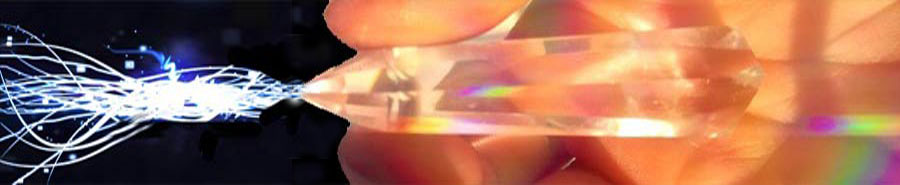
Generating Electricity from Crystals
-
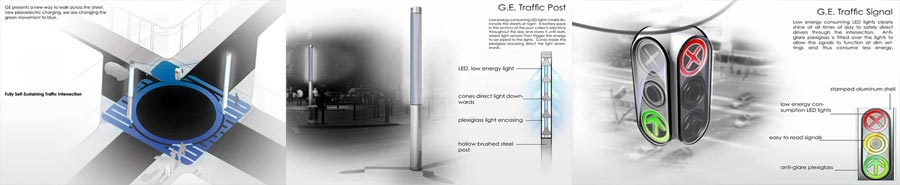
Conceptual Design of Piezo Roads

-
Versatility of Piezo Electricity

-
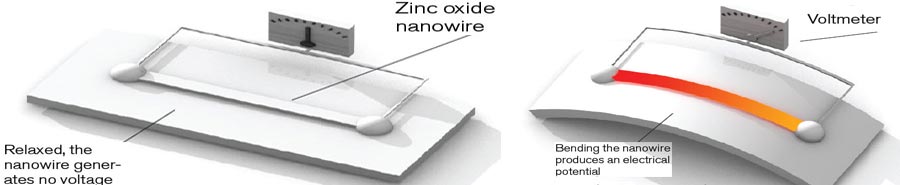
Representation of Change of Shape to generate current
-
Practical Applications of Piezoelectricity





Introduction
Piezoelectricity is the charge which accumulates in certain solid materials (notably crystals, certain ceramics, and biological matter such as bone, DNA and various proteins) in response to applied mechanical stress. The word piezoelectricity means electricity resulting from pressure.
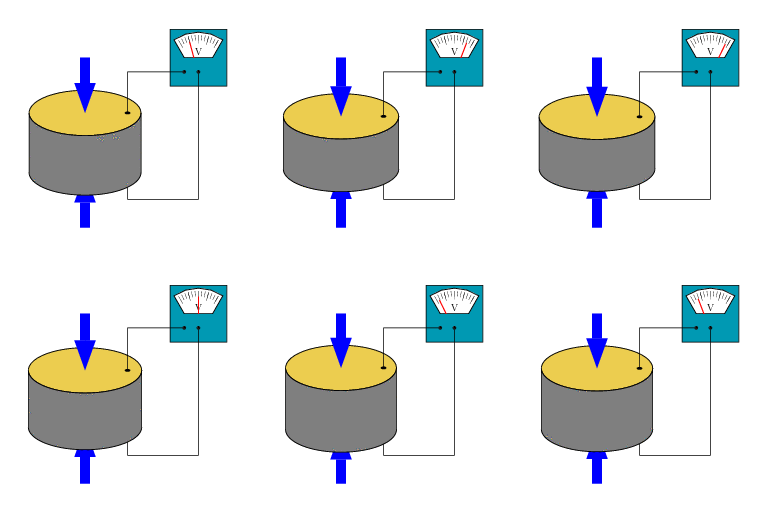 Animated Piezo Generator
The piezoelectric effect is understood as the linear electromechanical interaction between the mechanical and the electrical state in crystalline materials with no inversion symmetry. The piezoelectric effect is a reversible process in that materials exhibiting the direct piezoelectric effect (the internal generation of electrical charge resulting from an applied mechanical force) also exhibit the reverse piezoelectric effect (the internal
generation of a mechanical force resulting from an applied electrical field).
For example, lead zirconate titanate crystals will generate measurable piezoelectricity when their static structure is deformed by about 0.1% of the original dimension.
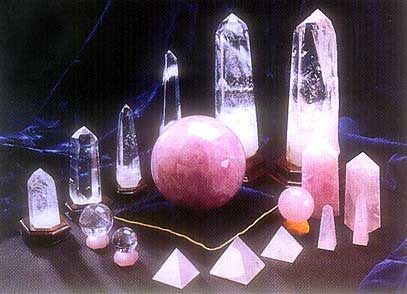 Piezo Crystals
Piezoelectricity is found in useful applications such as the production and detection of sound, generation of high voltages, electronic frequency generation, microbalances, and ultrafine focusing of optical assemblies. It is also the basis of a number of scientific instrumental techniques with atomic resolution, the scanning probe microscopies such as STM, AFM, MTA, SNOM, etc., and everyday uses such as acting as the ignition source for cigarette lighters and push-start propane barbecues.