Currently, industrial and manufacturing is the largest application market for piezoelectric devices, followed by the automotive industry. Strong demand also comes from medical instruments as well as information and telecommunications. The global demand for piezoelectric devices was valued at approximately US$14.8 billion in 2010. The largest material group for piezoelectric devices is piezocrystal , and piezopolymer is experiencing the fastest growth due to its light weight and small size.
Piezoelectric crystals are now used in numerous ways:
High voltage and power sources
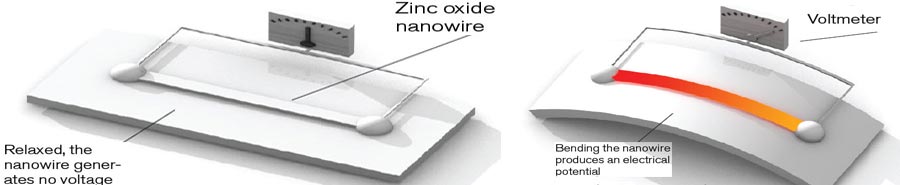
Direct piezoelectricity of some substances like quartz, as mentioned above, can generate potential differences of thousands of volts.
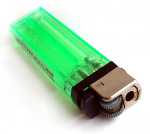
A Lighter
The best-known application is the electric cigarette lighter: pressing the button causes a spring-loaded hammer to hit a piezoelectric crystal, producing a sufficiently high voltage electric current that flows across a small spark gap, thus heating and igniting the gas. The portable sparkers used to light gas grills or stoves work the same way, and many types of gas burners now have built-in piezo-based ignition systems.
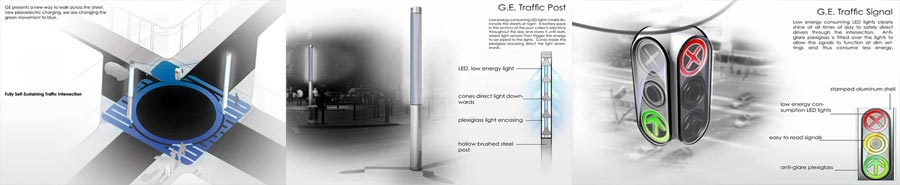
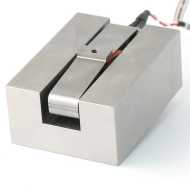
A similar idea is being researched by DARPA in the United States in a project called Energy Harvesting, which includes an attempt to power battlefield equipment by piezoelectric generators embedded in soldiers' boots. However, these energy harvesting sources by association have an impact on the body. DARPA's effort to harness 1-2 watts from continuous shoe impact while walking were abandoned due to the impracticality and the discomfort from the additional energy expended by a person wearing the shoes. Other energy harvesting ideas include harvesting the energy from human movements in train stations or other public places and converting a dance floor to generate electricity.Vibrations from industrial machinery can also be harvested by piezoeletric materials to charge batteries for backup supplies or to power low power microprocessors and wireless radios.
A piezoelectric transformer is a type of AC voltage multiplier. Unlike a conventional transformer, which uses magnetic coupling between input and output, the piezoelectric transformer uses acoustic coupling. An input voltage is applied across a short length of a bar of piezoceramic material such as PZT, creating an alternating stress in the bar by the inverse piezoelectric effect and causing the whole bar to vibrate. The vibration frequency is chosen to be the resonant frequency of the block, typically in the 100 kilohertz to 1 megahertz range. A higher output voltage is then generated across another section of the bar by the piezoelectric effect. Step-up ratios of more than 1000:1 have been demonstrated. An extra feature of this transformer is that, by operating it above its resonant frequency, it can be made to appear as an inductive load, which is useful in circuits that require a controlled soft start. These devices can be used in DC-AC inverters to drive cold cathode fluorescent lamps. Piezo transformers are some of the most compact high voltage sources.








 Energy Harvester by DARPA